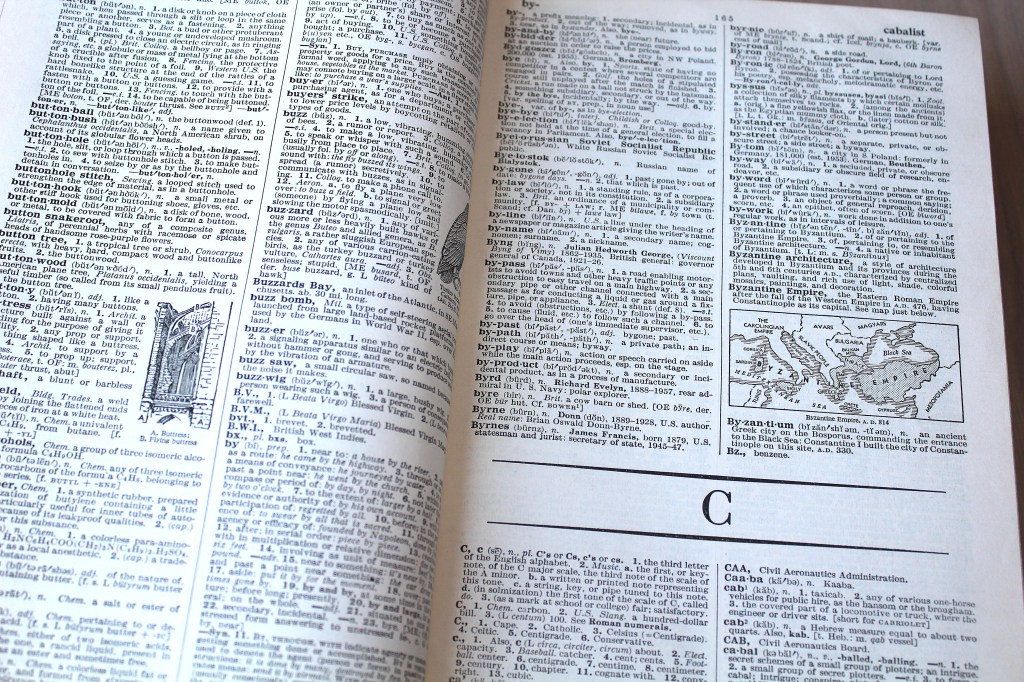
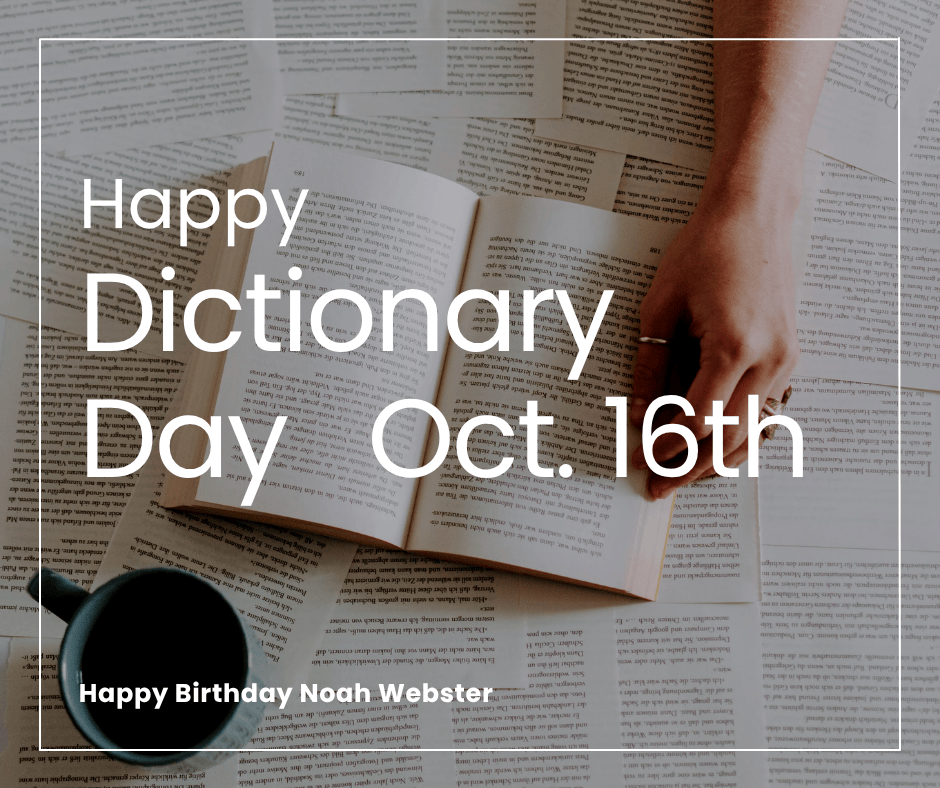
Some childhood memories last a lifetime. Whenever I asked my parents how to spell a word, they would reply, “Look it up in the dictionary.” I hated that answer at the time, but now it makes me smile. In honor of Dictionary Day, I’m excited to share the story behind this national observance and the remarkable legacy of Noah Webster.
Why October 16?
Noah Webster was born on October 16, 1758, in Hartford, Connecticut. He and his siblings were taught by their mother, and young Noah studied spelling, music, and mathematics. His father was a farmer who had not attended college, but he valued education so highly that he mortgaged the family home to send Noah to Yale University. Webster enrolled before his sixteenth birthday.
Coming of age during the American Revolution, Webster embraced many of the era’s radical ideas. He even joined the Connecticut militia, briefly interrupting his studies. He later championed an American form of English distinct from that of the British Empire and worked diligently to shape many of the spelling differences we recognize today.
Building an American Dictionary
Webster’s first dictionary, published in 1806, defined 37,000 words. He spent the rest of his career editing the work and adding new entries. In 1828, at age 70, he published an expanded dictionary containing more than 65,000 words.
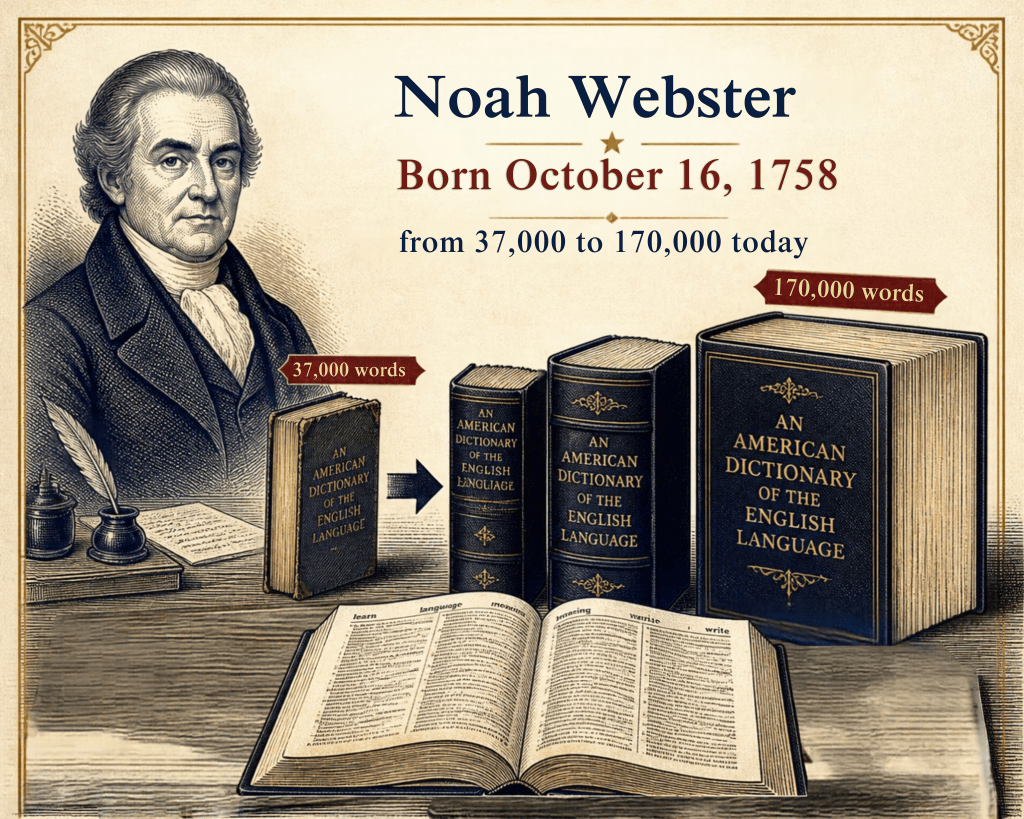
Webster simplified many spellings by removing the “u” from words such as colour and honour. His goal was to make spelling more phonetic and distinguish American English from British English. Not every proposal endured—his attempt to remove silent final “e”s did not catch on—but he also added distinctly American words, including skunk and squash. Dictionaries continue to evolve today, and digital editions can add as many as 1,000 words each year.
My Dictionary Memories
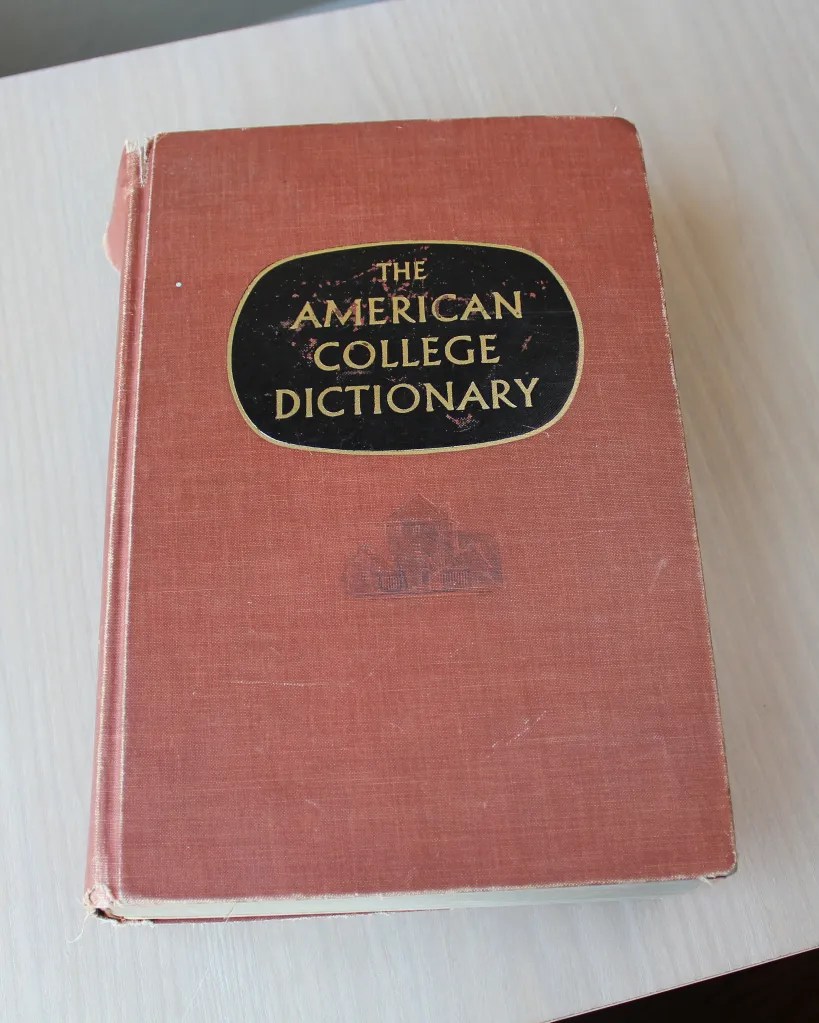
I was delighted when I received my own hefty copy of The American College Dictionary. As a child, I loved exploring its thin, two-column pages, which held far more than definitions. Small illustrations and notes often offered clues to a word’s history. The dictionary was also always nearby during games of Scrabble, ready to settle any challenge to a player’s word choice.
Dictionaries in the Digital Age
Although we rarely reach for a printed dictionary now, dictionaries still surround us in digital form. On a Kindle, a quick pause can reveal the precise meaning of an unfamiliar word. Phones, tablets, and computers suggest corrections for misspellings—or, as we often prefer to call them, typos.
Keeping the Human Touch in Communication
Words can bring beauty, hope, and inspiration, so choose them thoughtfully and use them to enlighten others. Even in the digital age, handwritten notes remain a meaningful tradition. Advances in printing and postal services during the 1800s made postcards and greeting cards a fast, popular way to stay in touch.
Today, use every method available to stay connected, but do not overlook the most personal: a piece of paper carrying your words and signature. Receiving an unexpected note or card feels special—not only because a friend or family member held it in their hands, but also because they took the time to write and mail it.
Keep this tradition alive. Choose a card or stationery that feels just right, write a heartfelt message, and send it to someone you love.