Throughout history, May celebrations have undergone significant changes. Always creating a sense of unity among members of the communities. New traditions have developed and continue to connect people across generations and cultures.
Rooted to Agriculture
May first falls midway between the equinoxes, the spring and summer. An important time in agriculture. For centuries most humans were directly involved with gathering or producing the food they put on their tables.
Thanks to Rome
This holiday had a pagan beginning in many parts of Europe. The Roman’s celebrated with a festival to Flora, the goddess of spring and season of flowers from the end of April to the beginning of May. As they conquered an area their practices were incorporated with the locals.
Lillies of the Valley
In France King Charles IX is credited with one of the traditions. In 1561, he was given a bouquet of lilies of the valley for luck. He started the tradition of giving the lily of the valley flowers to the women at court on May first. Thought originally as a charm to attract prosperity, they became recognized as a symbol of appreciation and affection. The tradition has continued and it is an important part of spring celebrations in France.
Britain’s Contribution
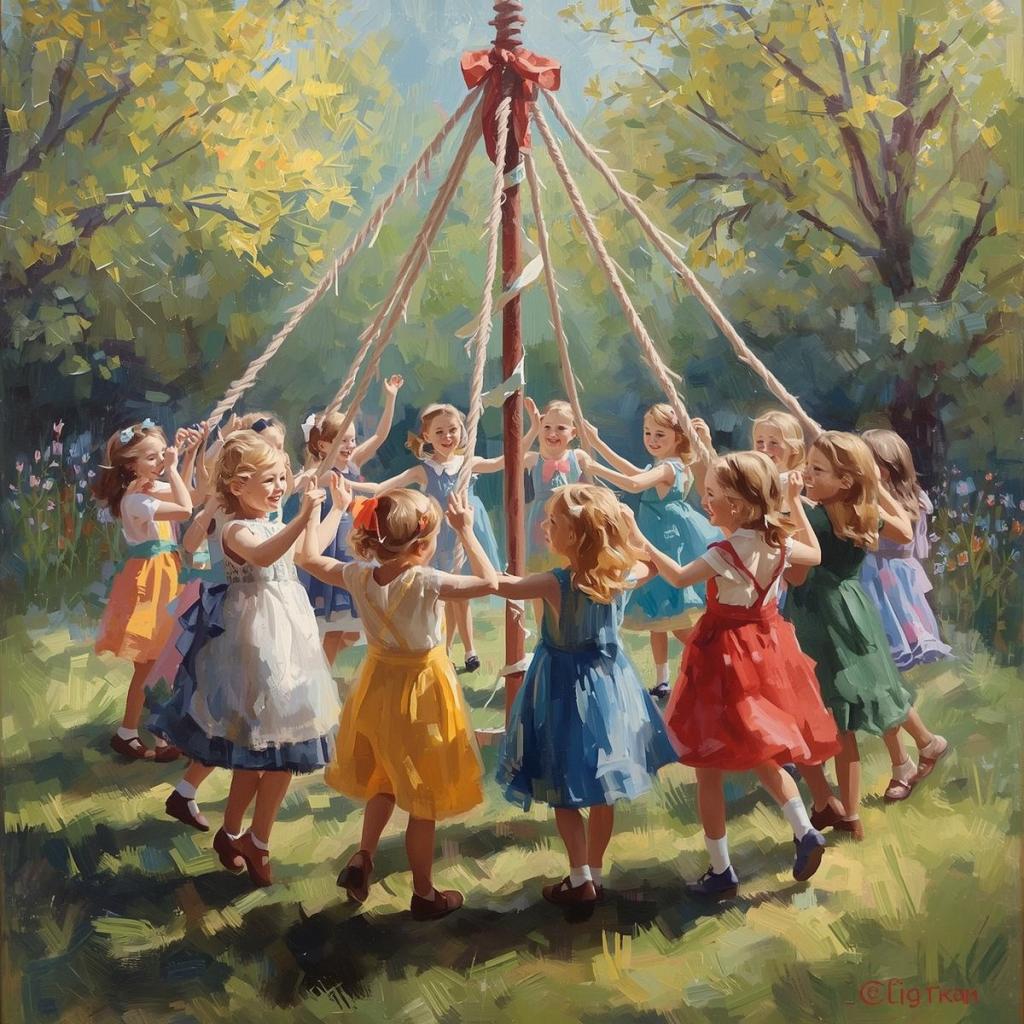
Medieval traditions in Britian included crowing the May Queen and dancing around the Maypole. These were later brought to America as well at the French tradition of giving flowers.
Adopted in the New World
The practices of maypoles and flower baskets continued in the U.S. for decades. Very popular in the mid-nineteenth century. May baskets were woven into the story line of one of Lousia May Alcott novels. Never heard of a May Basket? Read my description below.
A May Basket
Made of simple materials: paper, glue, ribbon, a small hanging basket was created. Filled with early spring flowers from a family’s garden or found growing wild. To some baskets a candy or a homemade treat would be included. Then with their paper baskets filled with their treasures, then stealthily set about their mission.
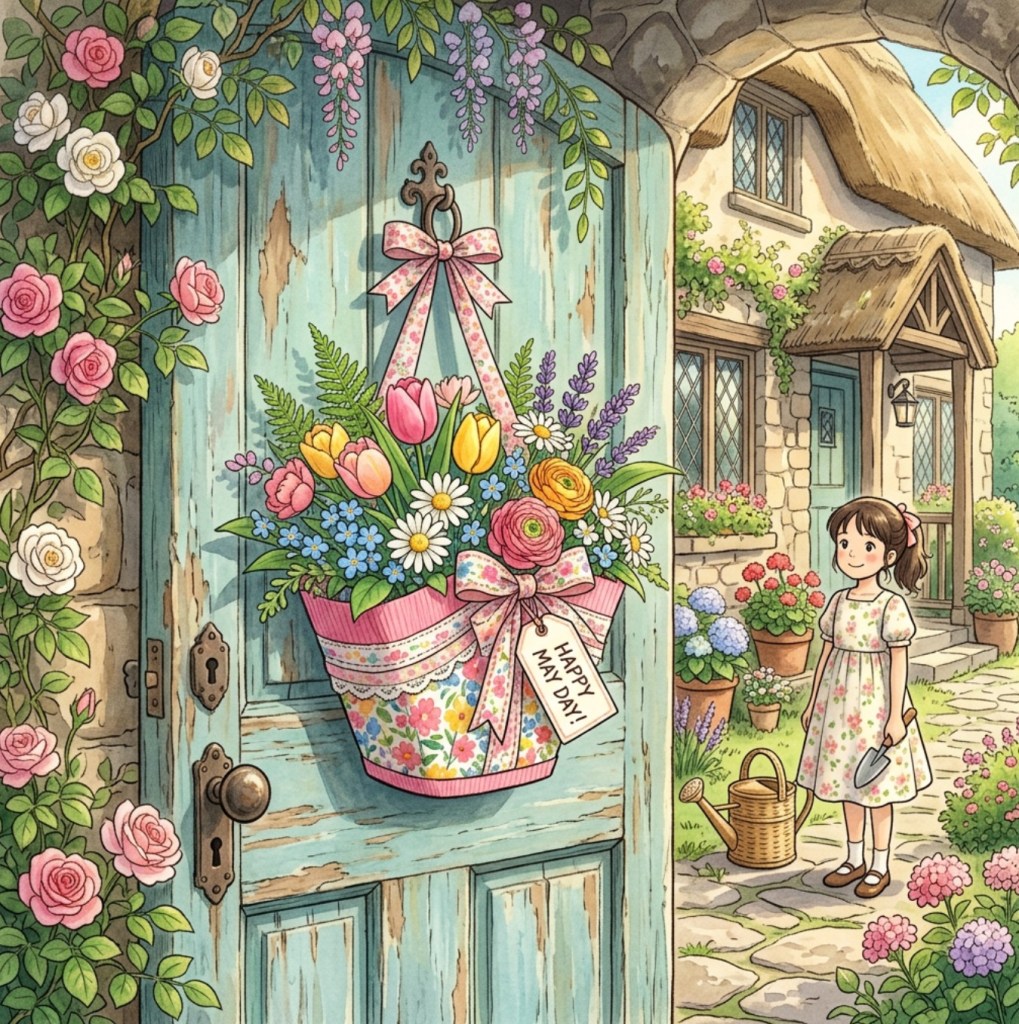
The trick was to deliver their May Baskets on their targets front porch without getting caught. These were hung in the community on a neighbor’s front door. If a ribbon loop was used it would be slipped over the doorknob. Some accounts suggested knocking on the door and then hiding to watch their reactions. But in some cases, you’d want to get caught. What if it was the home of your sweetheart? One account suggested if someone caught you, you received a kiss!
Experienced Decline in 1960’S
Newspapers for decades reported on May First celebrations. That was until the early 1960’s. The holiday quietly disappeared from the papers and in practice in many communities across the country.
In the mid-twentieth century the world was changing in many ways. Perhaps most importantly, most of the population was not tied to the soil. The gathering for the spring rituals, that helped build community, were no longer practiced. Families moved away, into the suburbs. The people next to them were strangers. Now people rarely spoke beyond polite greetings to their neighbors. The isolation of modern life had begun.
New Holiday from Europe
In 1999, a group of friends in Paris France had an idea. They created “Paris d’Amis” or “Challenges for Friends”. The idea was to strengthen ties between residents in an urban setting. They wanted people to sense they were surrounded by friends they could count on in their urban neighborhood. Also, to promote closeness among the neighborhoods.
European Neighbor Day Expands
Their plan was a success in their urban neighborhoods and continued to grow converts throughout France and in other countries in Europe. In 2004, officially European Neighbor Day was launched with millions participating. Popular with apartment complexes it grew rapidly. As of 2023, over 1,000 cities in over 49 countries are involved in European Neighbor Day with over 30 million participants.
Community is Important
Ever hear the phrase it takes a village to raise a child? It’s true, children benefit from being part of a community. It helps them develop emotionally, intellectually and physically. The skills they develop through building relationships within their community prepares them for adulthood.
Studies and research have shown positive strong social connections can reduce stress and inflammation. More is being learned each day of the many diseases that are exacerbated by inflammation in our bodies. We all need to reduce inflammation to maintain good health.
Sharing experiences with others is good for our emotions. It builds connections and can reduce feelings of isolation. Research is suggesting it even helps our physical brains function better.
Why This Holiday
We need to build ties of friendship within our local communities. Maypole dancers had to cooperate as a team. They not only created beauty but also made lasting memories and built stronger community bonds. We aren’t ready to re-create a maypole dance, but we can start this spring to make connections within our communities.

Ideas to Build Community
- Greet your neighbors when you see them. Have a friendly conversation with them.
- Share a meal or a gift of food. If you bake, take over a sweet treat.
- Offer a token of appreciation. Garden? A few cut flowers or a plant. Be creative, share your talents.
Remember Distant Connections
Spring is also a wonderful time to strengthen existing relationships. Reach out to the special people in your life—a professional spring floral arrangement is lovely, but even a notecard decorated with flowers shows you care. Taking the time to pick, sign, and mail a card offers both you and the recipient a moment of joy and connection.
Closing Thoughts
The Maypole and May Basket were originally going to be the only subjects of this blog. There still are communities that host Maypole celebrations. If you are interested below are some places. There are others too, check local event calendars and search the internet. If you do attend, I’d love to hear about your experience.
Holidays that include paper or friendship are among my favorites. These May traditions are a great match for both themes. I discovered more about building community than I shared. Please let me know in the comments if you would like to have more ideas for strengthening the sense of community where you live.
 Paper Crafted Bliss